Observing Skills
How to Get Sharp, Reliable Focus With Any Telescope Every Time
Learn to focus any telescope quickly and keep it sharp all night, from bracketing technique to eyeglasses and temperature drift.
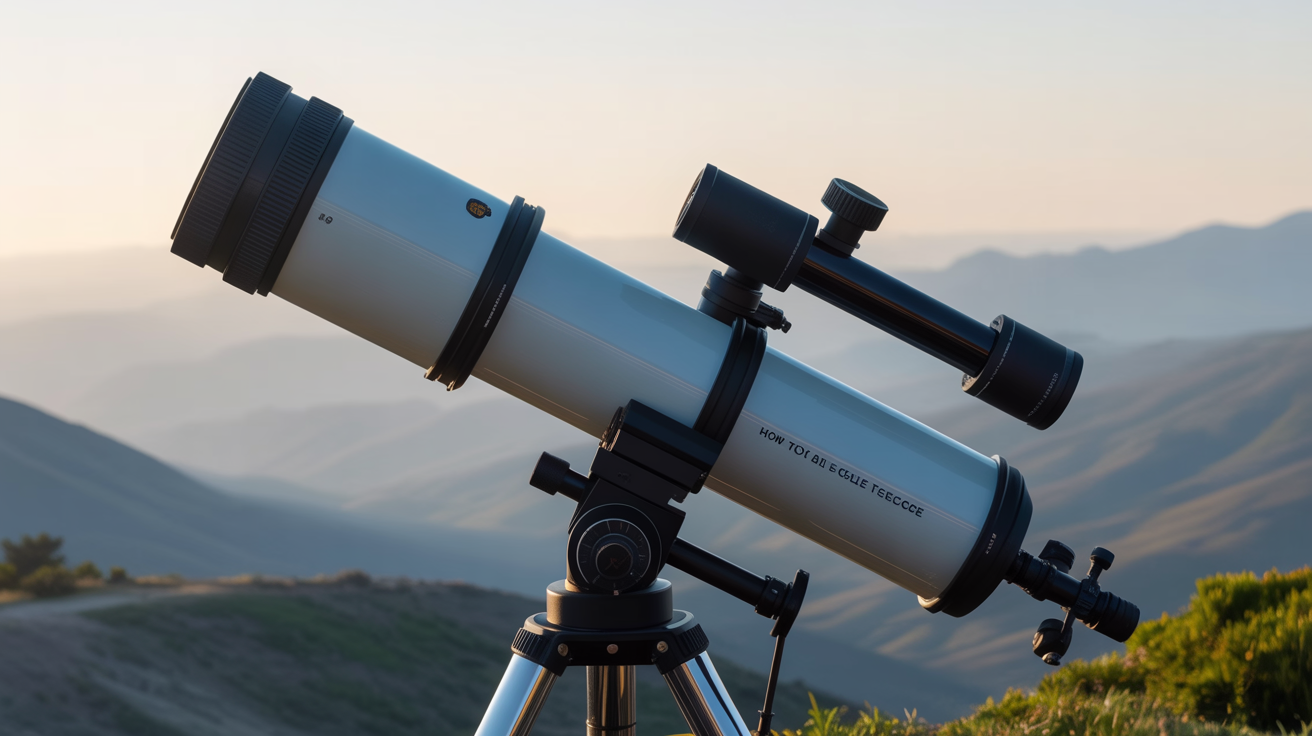
If your views through the eyepiece always look a little soft, like you're looking through a thin layer of fog, the problem usually isn't your telescope. It's how you're focusing it. Learning how to focus a telescope properly is one of those skills nobody teaches you up front, and most beginners just spin the focuser knob until things look "close enough." True focus on a bright object can be razor sharp even in a modest scope, and a soft image will make good optics look bad every time.
Focusing well is a skill you build in a session or two, not months. It comes down to picking the right target first, using a deliberate back-and-forth method instead of guessing, knowing what to do about eyeglasses, and expecting focus to drift a little as the night goes on. None of that needs new gear, though we'll cover when a focuser upgrade is worth the money.
How to Focus a Telescope: Start on an Easy Target
The single biggest mistake beginners make is trying to focus on the exact faint object they're hoping to see, like a dim galaxy or a small planetary nebula. That's backwards: faint, low-contrast targets are hard to focus on precisely because you can barely see them well enough to judge sharpness at all.
Instead, always start on something bright: a star you can find without much hunting, the Moon if it's up (its surface has endless texture and edges to judge sharpness against), or a bright planet like Jupiter or Saturn.
Get the focuser turning smoothly on that bright target first. A star should shrink from a fuzzy blob into the smallest, tightest point of light you can manage. The Moon's craters and terminator line (the boundary between light and dark) should snap from mushy to crisp, with fine detail visible right up to the edge.
Once you've nailed focus on something bright, move to your actual target with the focuser already close to correct. Most telescopes hold focus reasonably well across nearby areas of sky, so from there you're fine-tuning rather than starting from zero. If you're still learning to locate objects at all, get comfortable with your finder first. Our guide on using a finderscope or red dot finder covers that groundwork, and once you can reliably land on targets, star-hopping to fainter objects without a GoTo mount gets a lot less frustrating.
Bracket Your Way to True Focus
Turning the knob until things "look okay" is how you end up stopping short of actual focus. The fix is a simple technique astronomers call bracketing, and once you've done it a few times it becomes automatic.
The bracketing method, step by step
- Turn the focuser in one direction until the image goes noticeably soft and blurry.
- Turn it the other way, past the point where it looked sharp, until it's blurry again on that side too.
- Now you know focus sits somewhere between those two blurry extremes. Slowly work your way back toward the middle.
- Make small adjustments and pause after each one. Your eye needs a moment to judge sharpness; it's not instant.
- Keep narrowing the range until turning the knob in either direction only makes things worse, never better.
It works because it's much easier for your eye to detect that something has gotten worse than to judge in isolation whether it's at its best. Deliberately overshooting in both directions turns a vague guessing game into a search that closes in on the correct point from both sides. One more trick: bring the focuser in slowly from a defocused position and stop the instant the image sharpens, rather than continuing to fiddle after it's already good.
Should You Keep Your Glasses On?
This trips up a lot of new observers. Whether to observe with your glasses on depends mostly on what kind of vision correction you need. If your eyes are correctable with a simple spherical prescription (most nearsightedness and farsightedness, without significant astigmatism), you can usually take your glasses off and refocus the telescope to compensate. The focuser has enough travel for most people's eyesight, and it often gives a more comfortable view with eyepieces that have short eye relief.
If you have astigmatism, though, the focuser can't correct for it the way it corrects for near- or farsightedness, because astigmatism is a shape issue in the eye's lens or cornea, not a matter of where the image lands. Keep your glasses on in that case.
The other factor is eye relief: how far back from the eyepiece your eye can sit and still see the full field of view. Short eye relief (common on inexpensive eyepieces under about 10mm of focal length) forces your eye right against the glass, which is awkward with glasses on. Eyepieces built with long eye relief are designed so eyeglass wearers stay comfortable, so if you wear glasses for astigmatism, prioritize those. For more on how eyepiece design plays into this, see our rundown of eyepieces, focal length, field of view, and Barlows.
Why Focus Drifts Partway Through a Session
Here's something that catches beginners off guard: you focus perfectly at the start of the night, and forty minutes later everything looks soft again, even though you haven't touched the focuser. It's not your imagination or the telescope failing. It's temperature.
Telescope tubes, especially metal ones, expand and contract as air temperature drops through the evening. That tiny change in tube length shifts the distance between the mirror or lens and the focal plane, which shifts focus. The effect is usually gradual, so you may not notice it happening, only that the view has quietly gone soft.
A few habits help: let your telescope cool to outside air temperature before your session starts (a scope brought straight from a warm house keeps shifting focus and showing shimmering views as it equalizes; twenty to forty minutes outside beforehand, more for larger mirrors, makes a real difference), recheck focus periodically through the night rather than assuming an hour-old setting still holds, and don't assume a soft view later means something is wrong with the equipment before you've checked focus again.
Stock Focuser vs. Dual-Speed: When the Upgrade Is Worth It
Most telescopes, especially budget and mid-range models, ship with a simple single-speed rack-and-pinion focuser. It works, but it has a known weakness: a small amount of play, or slop, in the mechanism, so the eyepiece assembly can shift slightly out of position right as you stop turning. That's maddening when you're trying to nail sharp focus on a planet at high magnification.
Signs your stock focuser is holding you back
You consistently overshoot focus and hunt back and forth more than feels reasonable. At high magnification, small knob movements produce big, hard-to-control jumps. Or the focuser feels loose and the eyepiece shifts slightly the moment you let go of the knob.
When to actually spend the money
A dual-speed focuser adds a second, finer knob geared down significantly from the main one, often around a 10-to-1 ratio, so a full turn of the fine knob moves the focuser only a small fraction of what the coarse knob would. That lets you close in on true focus with smaller, more controllable steps.
The upgrade is genuinely worth it if you regularly observe planets or the Moon at higher power, where precise focus matters most. It's less essential if most of your observing is lower-power, wide-field views of star clusters or the Milky Way, where focus tolerance is looser and a stock focuser rarely holds you back. If you're still deciding whether a scope is worth keeping long-term, spend a season learning the sky with what you have before spending on focuser upgrades. Good technique closes most of the gap for free.
Frequently Asked Questions
Why does my telescope image look blurry no matter how I focus?
Rule out other causes first: dew on the eyepiece or corrector lens, a telescope that hasn't cooled to outside temperature yet, or poor atmospheric seeing (shimmering from turbulent air, which no amount of focusing fixes). If a bright star still won't come to a sharp point after careful bracketing, check for dew.
Can I use autofocus or focus by feel alone without looking through the eyepiece?
No. Visual telescopes have no autofocus, and by-feel focusing is unreliable because the best position varies by target and temperature. Always confirm focus by eye on a bright target rather than trusting where the knob happened to land last time.
Does a more expensive telescope focus more easily?
Not necessarily. Focus ease depends more on the focuser's mechanical quality (smoothness, lack of play, fine-adjustment options) than on the price of the optics. A budget telescope with a well-adjusted focuser can be easier to focus than an expensive one with a sloppy focuser.
How do I know if I've truly reached best focus, not just "good enough"?
Use the bracketing method every time rather than stopping the first moment something looks acceptable. If you can still turn the knob a small amount in either direction without the view getting worse, you haven't narrowed down to true focus yet.
Should I mark or note my focus position for future sessions?
It's a helpful habit, especially with a dual-speed focuser that has fine markings, but don't treat it as a shortcut past focusing altogether. Temperature and which eyepiece you're using will shift the exact point, so treat a saved position as a starting point, then confirm on a bright target every time you set up.