Planets & Deep Sky
How to Observe the Moon: Craters, Maria, and the Terminator
Learn how to observe the Moon's craters, maria, and terminator with any telescope or binoculars. Includes the best features to find and when to look.
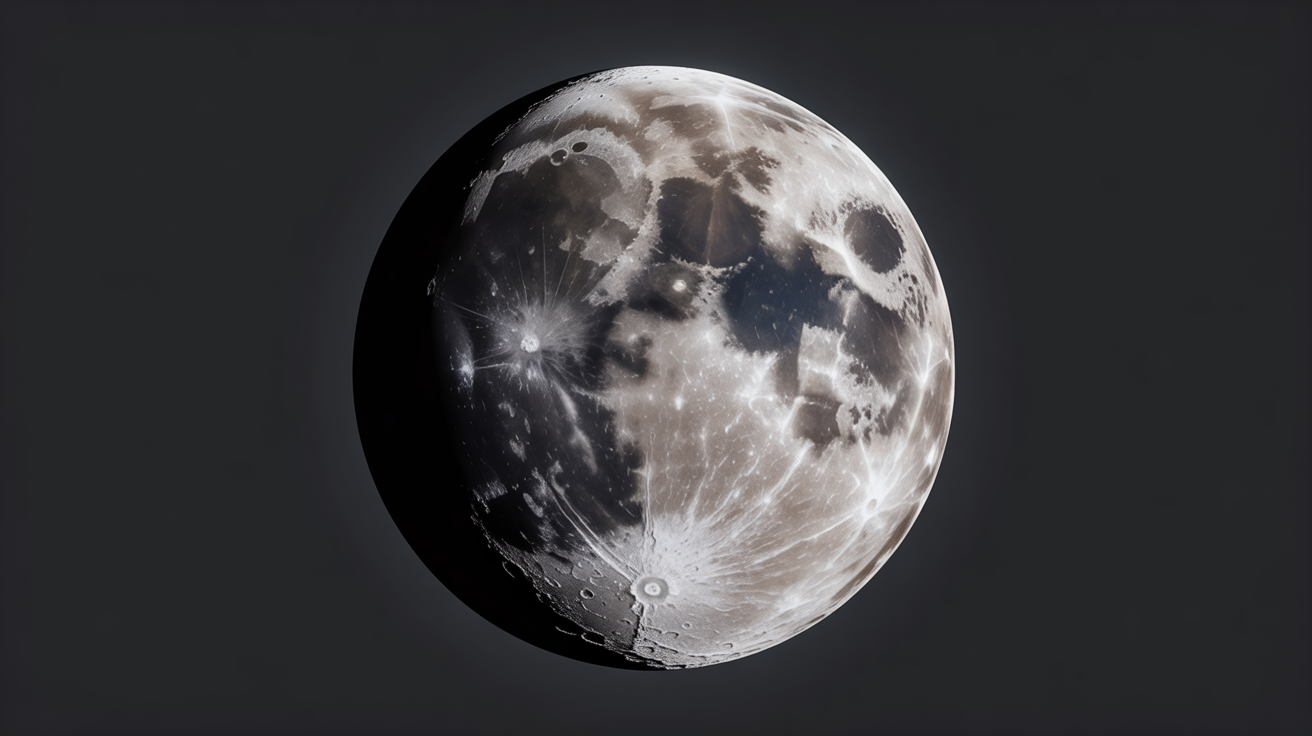
Point any telescope at the Moon on a clear night and you'll immediately understand why lunar observing hooked generations of astronomers before anyone ever reached orbit. The detail is staggering: mountain ranges casting long shadows, ancient impact basins the size of states, and crater walls that look close enough to touch. NASA notes that the Moon's craters preserve billions of years of impact history that would have long since eroded away on a world with wind and water. You don't need a large aperture or a dark sky site. You need the right phase, a little patience, and some idea of what you're actually looking at.
At a Glance
- Skip the full Moon. A thin crescent through first quarter, or last quarter back to crescent, gives you the long shadows that make craters and mountains pop.
- The terminator, the line between lunar day and night, is where nearly all the interesting three-dimensional detail lives.
- A 60mm refractor or 10x50 binoculars already show hundreds of craters and every major mare; 100mm-plus starts resolving central peaks and fine ridges.
- Magnification above 150x rarely helps, because atmospheric seeing, not aperture, is usually the limiting factor for lunar detail.
- Libration lets you catch a few extra degrees of the eastern and western limbs each month, so features near the edge are worth revisiting.
- Official crater and mare names come from the USGS Gazetteer of Planetary Nomenclature, maintained on behalf of the International Astronomical Union.
Why Phase Matters More Than Aperture
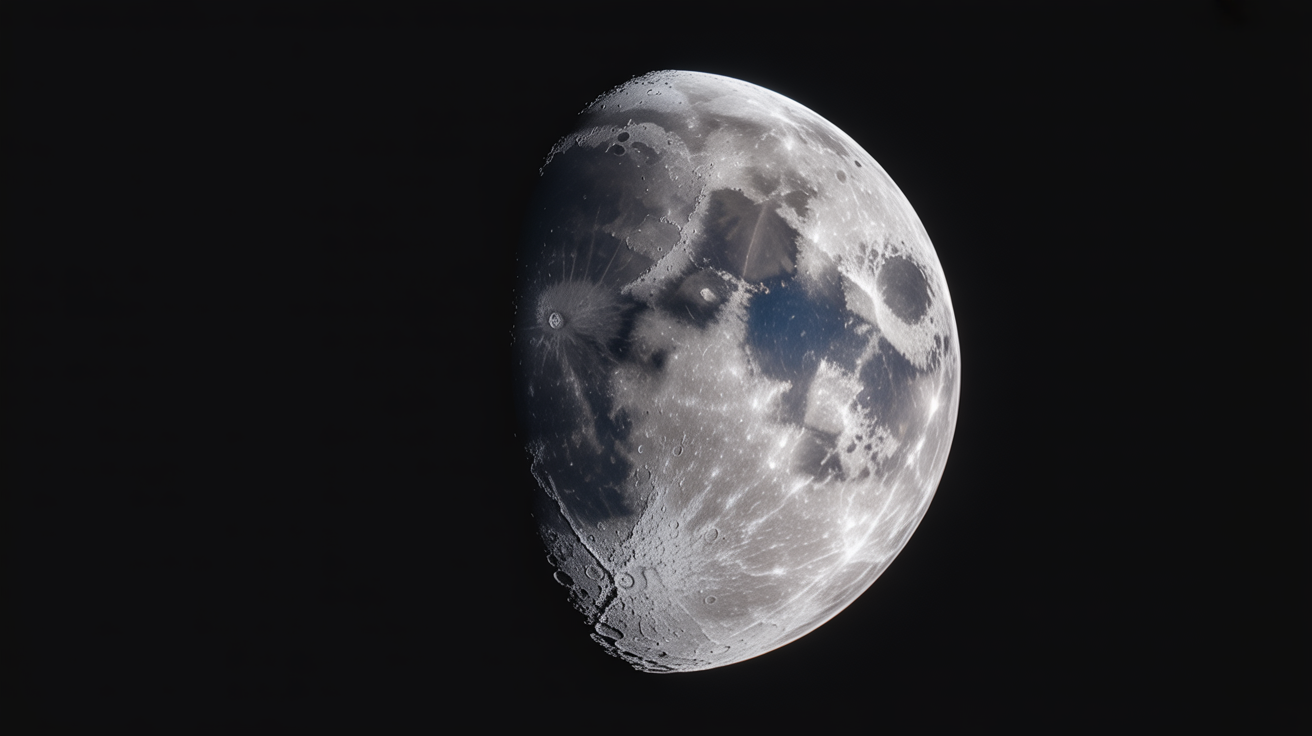
Here's the thing most beginners get backwards: a full Moon is one of the worst times to look. The Sun is shining almost straight down onto the lunar surface, eliminating shadows, and all that reflected light in the eyepiece creates an eye-watering glare that washes out subtle detail. Craters look like faint circular smudges instead of the dramatic pits they really are.
The best time to view the Moon is anywhere from a thin crescent through first quarter (half Moon, waxing) or from last quarter back toward crescent (waxing). At these phases, sunlight strikes the surface at a low angle and shadows do the work for you. A rim that's only a few hundred meters tall throws a shadow kilometers long when the Sun is near the horizon from that spot on the Moon. That's what makes craters pop.
Plan to observe the Moon across multiple nights. The terminator crawls roughly 12 degrees of longitude per day, so features that were in deep shadow one night sit in full relief 24 hours later, and have vanished into the bright lit hemisphere the night after that. A notebook or a printed lunar map lets you track what's coming into view and revisit favorites.
What Is the Lunar Terminator?
The terminator is the boundary between the sunlit and shadowed halves of the Moon. It's not a physical feature; it's just the line where day meets night on the lunar surface, and it moves continuously as the Moon orbits Earth.
The terminator is where almost all the interesting observing happens. Craters, mountains, valleys, and scarps near it cast shadows at maximum length, making their three-dimensional shape readable. The same crater sitting well inside the bright hemisphere looks almost flat. A crater sitting exactly on the terminator can reveal its entire interior structure in a single eyepiece field.
Look for places along the terminator where mountain peaks catch sunlight while the valleys around them are still dark. The Apennine Mountains near the Apollo 15 landing site do this beautifully near first quarter, with individual peaks glowing like embers against the shadow below.
Getting Started: Equipment and Setup
You don't need a large telescope to observe the Moon. A 60mm refractor or a pair of 10x50 binoculars will show hundreds of craters and all the major maria. A 100mm (4-inch) or larger scope starts revealing fine detail inside craters, central peaks, and subtle ridge systems. Magnification in the range of 50x to 150x covers most lunar observing; pushing beyond that usually gains nothing because atmospheric seeing (turbulence) limits resolution more than aperture does.
Two things help a lot:
- A moon filter or neutral-density filter. These screw into the eyepiece barrel and cut the light by 70 to 80 percent. Your eyes stay comfortable, contrast improves, and you can observe for longer sessions without fatigue.
- Letting your eyes adjust. The Moon is so bright that dark adaptation isn't necessary, but stepping outside from a lit room and observing immediately means your pupils are constricted. Give yourself five minutes.
If you're using an undriven mount, higher magnification makes tracking more tiring. Start at lower power to identify targets, then switch up.
A Showpiece Tour: Features Worth Finding
The following features are visible in any decent telescope during the right phase. They're organized roughly by type, not by location on the disk. Names like Copernicus, Tycho, and Plato are not informal nicknames; they come from the official Gazetteer of Planetary Nomenclature, the same naming authority that catalogs features on every planet and moon in the solar system.
Craters
Copernicus (96 km diameter, near center of the disk) is the textbook example of a complex impact crater. It has terraced inner walls, a prominent central peak complex, and a ray system that spreads for hundreds of kilometers. It's spectacular around day 9 of the lunar cycle (just past first quarter) when the terminator grazes it.
Tycho (86 km, southern highlands) has the most dramatic ray system on the Moon, visible even at full Moon when almost nothing else stands out. The rays run up to 1,500 km and formed when the impact threw molten ejecta across the surface. At first quarter, Tycho's interior shows steep walls and a central peak.
Plato (109 km, northern region) is recognizable by its unusually flat, dark floor, flooded by ancient lava. The rim is sharp and well-defined. Patient observers with good seeing can spot a handful of small craterlets inside Plato's floor.
Clavius (231 km, southern highlands) is one of the largest impact basins on the nearside. It holds a curved chain of progressively smaller craters inside it, an easy target with 50x and memorable once seen.
Aristarchus (40 km, northwest) is the brightest crater on the Moon because of its young, reflective ejecta. The nearby Vallis Schröteri (Schröter's Valley) is a long, sinuous rille worth finding at the same time.
Maria
Maria (singular: mare) are the dark plains that make up the "face" pattern humans have seen in the Moon for millennia. They're solidified lava, flooded into ancient impact basins roughly 3 to 4 billion years ago. They're smooth compared to the highlands and have fewer craters because the lava flows buried the older cratered surface.
Mare Tranquillitatis (Sea of Tranquility) is where Apollo 11 landed, in the northeast part of the lunar nearside. It's easily identified by its dark, fairly uniform tone.
Mare Imbrium (Sea of Rains) is one of the largest and most geologically complex maria, bounded on the southeast by the Apennine Mountains. The boundary between Imbrium's lava plains and the mountainous rim is visible in binoculars.
Mare Crisium (Sea of Crises) is the isolated dark oval near the northeast limb. It looks like it should be small, but libration sometimes swings it more toward the center, revealing its true size: about 500 km across.
Mountains and Other Features
The Montes Apenninus (Lunar Apennines) rim the southeastern edge of Mare Imbrium and include peaks over 5,000 meters tall. Near first quarter, their east faces catch sunlight while the mare below is still dark, making individual peaks easy to identify.
The Vallis Alpes (Alpine Valley) is a straight cut through the Montes Alpes, about 180 km long. It's one of the most striking geological features on the Moon and visible in a small scope.
A Quick Reference: Best Lunar Day to Look
The Moon's 29.5-day cycle is counted in "lunar days" starting at new Moon. Use this table to plan which features will be on the terminator, and therefore at their most dramatic, on a given night.
| Lunar day | Moon phase | Terminator near | Best features in relief |
|---|---|---|---|
| Day 4-5 | Waxing crescent | Mare Crisium region | Mare Crisium, early highland craters |
| Day 7-8 | First quarter | Center of the disk | Copernicus (approaching), Montes Apenninus, Vallis Alpes |
| Day 9-10 | Waxing gibbous | Eastern maria | Copernicus at its best, Plato, Clavius |
| Day 14-15 | Full Moon | No terminator visible | Ray systems only: Tycho, Copernicus, Aristarchus |
| Day 20-21 | Last quarter | Western highlands | Clavius, Tycho's interior, southern craters |
| Day 25-26 | Waning crescent | Mare Crisium (again) | Mare Crisium from the other lighting direction |
Observing Strategy Across the Lunar Month
One productive habit is to pick a single section of the terminator each session and stay with it. Watch how features change appearance as you observe for an hour or two; the terminator moves slowly enough that you can see shadows shift if the seeing is steady.
Libration helps, too. The Moon's orbital mechanics mean it wobbles slightly over each month, exposing a bit of the eastern and western limbs in turn. Features near the limb that are geometrically foreshortened on most nights become temporarily more viewable. Apps and planetarium software show current libration so you can plan for it.
For sketching (which forces you to actually look carefully), a red flashlight and blank circles pre-drawn on paper work well. Many experienced lunar observers still sketch because it builds familiarity with the surface faster than photography does. A basic written observing log works just as well if sketching isn't your thing; the point is recording what you actually saw, not producing art.
If lunar observing has given you the itch to explore other targets in the solar system, the same skills transfer directly. The same kind of careful attention to phase and shadow applies when observing Jupiter and its four Galilean moons or when you're waiting for the right moment to see Saturn's rings through a telescope. And if you've never tried a deep-sky object, finding the Orion Nebula is a natural next step on a moonless night.
Frequently Asked Questions
What magnification is best for viewing the Moon through a telescope?
Anywhere between 50x and 150x works well for most lunar observing. Lower magnifications (50-80x) give you a wider field and are better for taking in large features like the maria and mountain ranges. Higher magnifications (100-200x) pull in detail inside individual craters, but you're limited by atmospheric seeing. On nights of poor seeing, 100x may look worse than 60x. Start low and increase only if the image stays sharp.
Is the full Moon good or bad for observing?
Bad, generally, for seeing surface detail. The full Moon is maximally bright and has no shadows because sunlight is hitting the surface nearly head-on. It's fine for casual gazing and for identifying the ray systems of young craters like Tycho, but the phases from crescent through gibbous are far better for studying craters, mountains, and the terminator.
What is the lunar terminator and why does it matter?
The lunar terminator is the line between the sunlit and shadowed sides of the Moon at any given moment. It's important for observing because features right on the terminator are lit at the most oblique angle, which maximizes shadow length and makes three-dimensional relief visible. A crater that looks flat and featureless in the bright hemisphere becomes a deep, wall-ringed pit when the terminator passes over it.
Can I see craters without a telescope?
The naked eye can resolve the overall dark/light pattern (maria versus highlands) but not individual craters. Binoculars, particularly 7x50 or 10x50, begin to reveal large craters like Tycho and Copernicus and the boundaries of the major maria. A small telescope of 60mm or more shows hundreds of craters clearly.
How often does libration change what I can see near the limb?
Libration cycles over about a month and can expose up to about 7 degrees of longitude beyond the average limb on each side. In practice, it means features near the eastern and western edges of the Moon come into better view for a few nights each month. For the most extreme limb features, checking current libration figures in a planetarium app tells you when conditions are best.
Who decides the official names of craters and maria?
The International Astronomical Union approves all official names for lunar features, with the working records maintained by the United States Geological Survey's Astrogeology Science Center in its Gazetteer of Planetary Nomenclature. Most crater names honor deceased scientists, scholars, and explorers, while maria carry Latin names tied to weather or states of mind, such as Mare Tranquillitatis (Sea of Tranquility) or Mare Serenitatis (Sea of Serenity), a naming convention that dates back to 17th-century astronomers who mistook the dark plains for actual bodies of water.
Why do some craters have rays and others don't?
Ray systems form when a relatively young, high-energy impact throws pulverized, reflective material outward in streaks. Over hundreds of millions of years, micrometeorite bombardment and solar radiation darken exposed lunar material through a process called space weathering, which fades the rays. Tycho, at around 108 million years old, still has bright, prominent rays. Older large craters of similar size have long since lost theirs, which is one reason planetary geologists use ray brightness as a rough way to estimate relative crater age.